Death is considered a natural transition in Sanatana Dharma, where the soul leaves the mortal body and continues its spiritual journey. In Hindu tradition, the rituals performed after death are not merely customs but sacred practices that help the departed soul attain peace and move toward liberation.
In Kerala, Hindu cremation rituals follow ancient Vedic traditions and are performed with deep spiritual significance. These rituals guide the soul on its journey and provide comfort to the grieving family.
This guide explains the Hindu cremation rituals practiced in Kerala, their meaning, and the important post-death ceremonies performed afterward.
Understanding Hindu Beliefs About Death
According to Hindu philosophy, the human body is temporary, while the soul (Atman) is eternal. When a person dies, the soul leaves the physical body and continues its journey based on karma.
The sacred text Mahabharata mentions the importance of post-death rituals and the responsibilities of family members to perform them properly. These rituals help release the soul from earthly attachments and guide it toward the next stage of existence.
The Hindu Cremation Process in Kerala
1. Preparing the Body
After death, the body is bathed and dressed in clean or traditional clothes. Sacred substances such as sandalwood paste, holy ash, or tulsi leaves may be placed on the body as part of purification rituals.
Family members and close relatives gather to offer prayers and pay their final respects.
2. Funeral Ceremony
The body is taken to the cremation ground, where final prayers and mantras are chanted. Traditionally, the eldest son or a close male relative performs the last rites.
Fire symbolizes purification in Hindu belief. Through cremation, the physical body returns to the five natural elements—earth, water, fire, air, and space.
3. The Cremation Ritual
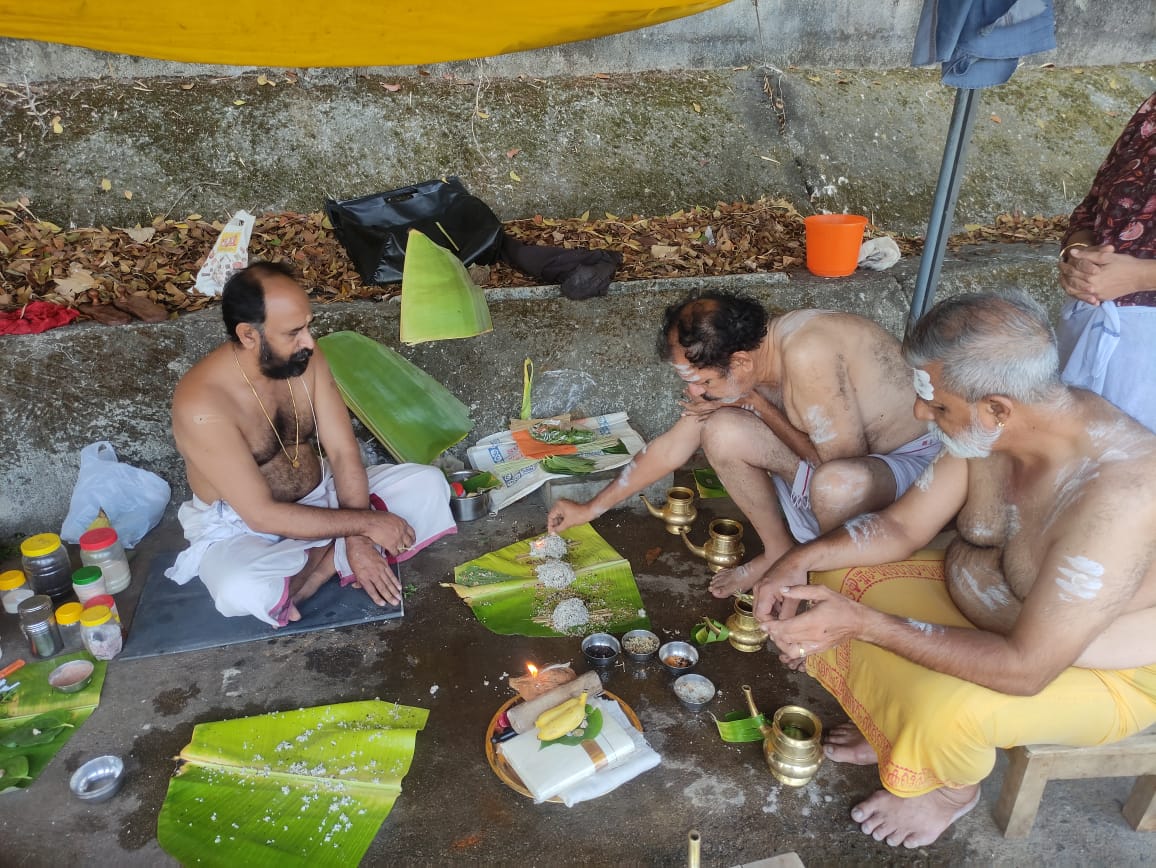
The sacred fire is lit to perform the cremation ceremony. Priests or karmis guide the family through the ritual chanting of mantras and prayers.
This moment is considered the final farewell to the physical body.
4. Collection of Ashes (Asthi Sanchaya)
After the cremation, the ashes and bone fragments are collected. This ritual is known as Asthi Sanchaya.
The ashes are later immersed in a holy river or sea, symbolizing the soul’s release from the physical world.
Post-Funeral Rituals in Hindu Tradition
The cremation is only the first step. Hindu tradition places great importance on rituals performed in the days following death.
These rituals are believed to help the departed soul complete its journey peacefully.
10th and 11th Day Kriyas
The 10th and 11th day rituals are important ceremonies performed to purify the family and help the soul move forward from the earthly realm.
14th, 15th and 16th Day Kriyas
These rituals are performed to complete the sequence of post-death ceremonies and ensure the soul reaches its rightful spiritual state.
Shraddham (Death Anniversary)
The yearly remembrance ceremony called Shraddham is performed to honor ancestors and express gratitude for their blessings.
The Role of a Karmi in Hindu Rituals
The word Karmi refers to a person who understands and performs sacred rituals according to traditional spiritual practices. While everyone performs actions in life, a true Karmi selflessly acts as a medium to carry forward divine knowledge and guide families during important spiritual ceremonies.
At Ivormadom, Santhosh Swamy has dedicated his life to helping families perform posthumous rituals after the departure of a loved one. These rituals are deeply rooted in the philosophy of Sanatana Dharma, which teaches that the soul is eternal while the body is temporary.
Posthumous rituals help guide the departed soul on its spiritual journey while offering comfort and peace to the grieving family. Through devotion and traditional knowledge, Santhosh Swamy performs these sacred ceremonies with care and responsibility.
Conclusion
Hindu cremation rituals in Kerala are deeply spiritual traditions passed down through generations. These ceremonies honor the soul’s journey and uphold the teachings of Sanatana Dharma.
Guidance from experienced karmis ensures that every ritual is performed according to the correct procedures and with the appropriate spiritual significance.
Ivormadom Santhosh Swamy continues this sacred responsibility by helping families perform meaningful posthumous rituals and honoring the eternal journey of the soul.